
Last Updated: July 2026
Installation of a leaf guard in the gutter is one of the most convenient methods to save metal gutters from leaves, pine needles, and other dirt and debris. Regardless of whether your gutters are made from aluminum, galvanized steel, or copper, a good leaf guard will help save time for maintenance, increase the efficiency of drainage, and prolong the life of your gutters. This step-by-step guide for installing gutter leaf guards in metal gutters will be useful in 2026.
Why Install Leaf Guards on Metal Gutters?
When installed correctly, a gutter leaf guard will not only decrease maintenance but will also help prevent standing water, which could cause rust, corrosion, mold, and even failure of your gutters. In regions where there are many trees, a good leaf guard will greatly reduce maintenance needs.
Benefits of Installing Best Gutter Guards
- Prevents clogged gutters and roofs
- Reduces gutter cleaning frequency
- Improves rainwater drainage
- Extends the lifespan of your gutter system
- Reduces ice dams during winter in colder climates
After installing hundreds of gutter protection systems, contractors typically recommend inspecting gutter slopes before attaching any guard because even premium guards cannot fix poor drainage.
Basic Installation Process
- Clean the gutters first
- Remove all leaves, dirt, and debris.
- Flush the gutters and downpipes with water.
- Measure the gutter
- Measure the total length and gutter width.
- Common mesh widths are 250 mm, 500 mm, and 700 mm.
- Prepare the mesh
- Cut the gutter guard mesh to the required length using tin snips.
- Attach under the roof edge
- For a metal roof, slide the back edge of the mesh under the first sheet or roof edge where possible.
- On some roofs, roof clips are used instead of lifting sheets.
- Fix the gutter lip
- Pull the mesh across the gutter.
- Secure it to the front lip of the gutter using self-drilling screws, pop rivets, or saddle clips (depending on the system).
- Create a slight curve
- The mesh should have a gentle dome shape so leaves slide off rather than collect on top.
- Overlap joins
- Overlap mesh sections by 50–100 mm to prevent gaps.
- Check valleys and corners
- Install valley trays or additional support where large amounts of leaves and water collect.
Types of Leaf Guards for Metal Gutters
Before gutter guard installation, choose the right type of premium gutter guards for your home.
| Type | Lifespan | Maintenance | Best For |
| Mesh | 20–30 Years | Low | Pine Needles |
| Screen | 10–20 Years | Medium | Leaves |
| Reverse Curve | 20+ Years | Very Low | Heavy Rain |
| Foam | 3–8 Years | High | Budget DIY |
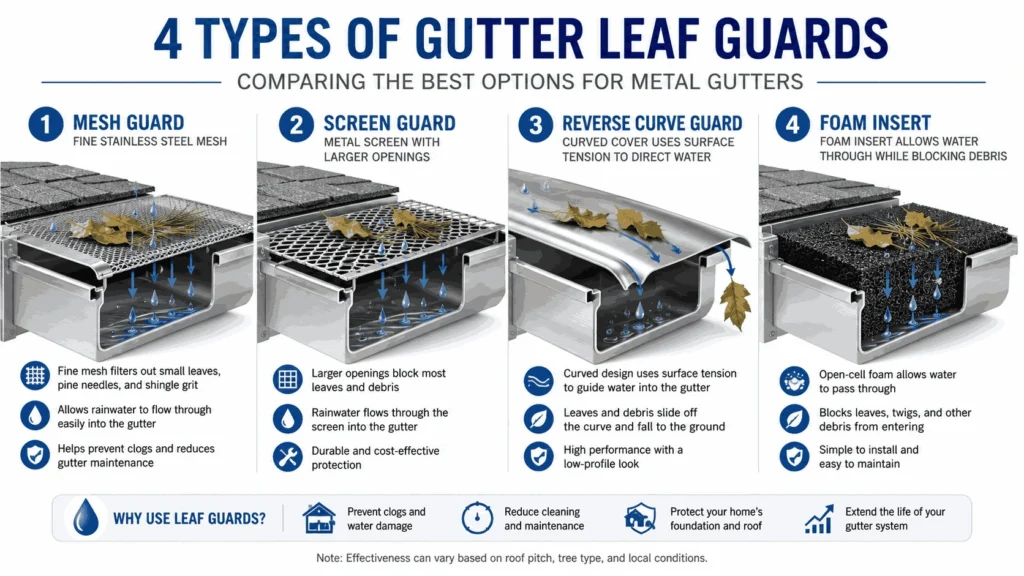
1. Gutter Mesh Leaf Guards
Fine mesh stainless steel or aluminum gutter leaf guard filters even the smallest debris, but allow free flow of rainwater through them.
Best For:
- Homes surrounded by trees
- Pine needles
- Small leaves
2. Screen Gutter Guards
Metal screens have larger openings and are easy to install.
Advantages:
- Affordable
- DIY-friendly
- Durable
3. Reverse Curve Guards
These guards use surface tension to direct rainwater into the gutter while leaves slide off.
Pros:
- Excellent performance
- Long-lasting
- Minimal maintenance
4. Foam Inserts
The foam insert fits into the gutter and lets water through but prevents debris.
While installation is quite simple, they are usually required to be changed more often than metal guards.
According to the Roofing Industry Association of Australia, improperly installed gutter guards placed beneath shingles can affect roof warranties if manufacturer instructions are ignored.
Tools and Materials
Should you be planning on having your gutter leaf guard installed, you have to make sure that you have a gutter that matches the size of your leaf guard, whether it is a 5-inch or 6-inch K-style gutter. There may also be a difference in compatibility between types of roofs.
Tools
- Ladder
- Work gloves
- Safety glasses
- Tape measure
- Tin snips
- Drill or screwdriver
- Utility knife
- Garden hose
- Soft brush
Best Materials for Metal Gutter Leaf Guards
| Material | Durability | Best Use |
| Stainless Steel | 20–30 years | Premium protection |
| Aluminum | 15–25 years | Budget-friendly |
| Copper | 30+ years | Historic homes |
| Plastic | 3–10 years | Temporary solutions |
The National Association of Home Builders recommends proper drainage systems to prevent structural water damage in residential construction projects.
Step 1: Inspect Your Gutters
Check the gutter for proper slope towards the downspout. Gutter systems usually require a slope of about 1/4 inch for every 10 feet in order to have effective drainage.
Check for:
- Loose brackets
- Rust spots
- Cracks
- Sagging sections
- Leaks
- Improper slope
Repair any damage before proceeding. Installing guards on damaged gutters will not solve drainage problems.
Step 2: Clean the Gutters Thoroughly
Ensure that nothing blocks the downspouts before installing the guards. Even though the downspouts might already be blocked, installing guards on them will cause overflows from the gutters when it rains heavily.
Next:
- Brush away remaining dirt
- Flush gutters with a garden hose
- Check that downspouts drain freely
Allow the gutters to dry before installation.
Step 3: Measure the Gutter Length
Measure every gutter section individually. Most leaf guard systems come in:
- 3-foot sections
- 4-foot sections
- 5-foot sections
Buy about 10% more material than you need to allow for cuts and errors.
Step 4: Cut the Leaf Guard to Size
Cut each one with tin snips to the length of your gutters. Wear gloves because metal is quite sharp. Make sure that no jagged edges remain.
Step 5: Install the First Section
Take note of the manufacturer’s recommendations. Some gutter guard systems cannot be installed under the roof shingles, and this could void the warranty of your roof.
For Mesh or Screen Guards
Install one edge under the roof shingles (as per instructions from the manufacturer). The other edge sits on the front lip of the gutter. Secure with:
- Screws
- Clips
- Snap-in fasteners
Do not overtighten screws, as this can warp the guard.
Step 6: Overlap Adjacent Sections
Install each additional section with a slight overlap. This helps:
- Prevent debris from entering between joints
- Improve water flow
- Increase structural strength
Most manufacturers recommend a 1–2 inch overlap.
Step 7: Secure Corners and End Caps
Corners often collect the most debris. Trim guards carefully around:
- Inside corners
- Outside corners
- Downspout openings
- End caps
Use additional clips or screws where necessary to prevent lifting during high winds.
Step 8: Test the Installation
If you notice water overshooting the gutter during heavy flow inspect the angle of the gutter leaf guard. A slight adjustment often improves water capture during intense rainfall.
Observe:
- Water entering the gutter
- Water flowing toward downspouts
- No overflow
- No loose sections
In case there is an overflow, you can check whether there was any fault in the slope or improperly installed guards.
Common Installation Mistakes to Avoid in Real Work
There are some errors made by many installers that make the leaf guards less effective. These errors for the gutter leaf guards include:
Installation on Dirty Gutters: Debris caught beneath the guards may result in future clogs.
Failing to Make Necessary Gutter Repairs: Gutters need to be repaired before installing the guards.
Wrong Fasteners: It is important to use corrosion-resistant screws for outdoor installations.
Impeding Water Flow: Improper installation will prevent rainwater from entering the gutters.
Safety: Never try to stretch away from the ladder and frequently move the ladder as much as possible.
During installations beneath pine trees, we typically recommend stainless steel micro-mesh guards because standard screen guards often allow pine needles to accumulate over time.
Maintenance After Installation
Although leaf guards require very little maintenance, they need some maintenance.
Inspect your gutters:
- Twice per year
- After major storms
- During autumn
- In spring
Clean the leaves occasionally from the guards’ surface. Flush out the system once a year to facilitate water flow.
How Long Do Metal Gutter Leaf Guards Last?

Quality metal gutter guards can last:
- Aluminum guards: 15–25 years
- Stainless steel mesh: 20–30 years
- Copper guards: 30+ years
Their lifespan depends on:
- Local climate
- Tree coverage
- Installation quality
- Material thickness
- Regular maintenance
Should You Install Leaf Guards Yourself?
DIY installation is suitable for many homeowners, especially with snap-in or screen-style gutter guards. However, professional installation may be the better option if:
- Your home has multiple stories.
- The roof has a steep pitch.
- Gutters are difficult to access.
- You choose premium reverse-curve systems.
- Structural gutter repairs are needed.
Getting help from a professional will also guarantee warranty satisfaction when it comes to gutter protection.
How Much Does Gutter Leaf Guard Installation Cost?
The cost of gutter leaf guard installation varies according to the type of material, gutter size, and whether it’s DIY or professional installation.
| Installation Type | Estimated Cost |
| DIY Screen Guards | $1–$3 per foot |
| Mesh Guards | $2–$6 per foot |
| Reverse Curve | $8–$15 per foot |
| Professional Installation | $10–$25 per foot |
Conclusion
Adding leaf screens to your metal gutter leaf guard system is possibly the best home improvement that you can do in 2026. This will save you a lot of money in terms of reduced cleaning costs and will increase the durability of your gutters by lowering their exposure to debris and clogging. You need only the right equipment and some careful preparation to accomplish this task within a day.
CTA: Ready to protect your metal gutters from costly clogs and water damage?
Contact Shine and Shield today for expert advice, professional installation, and durable gutter leaf guard solutions built to last.
Written by: Gutter Protection Specialists
FAQs
Do leaf guards work on all metal gutters?
All types of leaf guards fit most 5-inch and 6-inch metal gutters. Please confirm the fit before buying.
Are leaf guards able to prevent gutter cleaning?
Not completely; they make it less frequent, yet some cleaning may be necessary.
Is it possible to install leaf guards without removing my existing gutters?
Modern leaf guards easily mount on top of already installed metal gutters.
Are metal leaf guards superior to plastic ones?
Yes, they are more durable, UV-stable, and resistant.